Subfloor zones across Middle Tennessee endure prolonged seasonal humidity and saturated clay subgrades, transforming exposed crawl spaces into entry conduits for wood-destroying organisms. In older housing stock within…
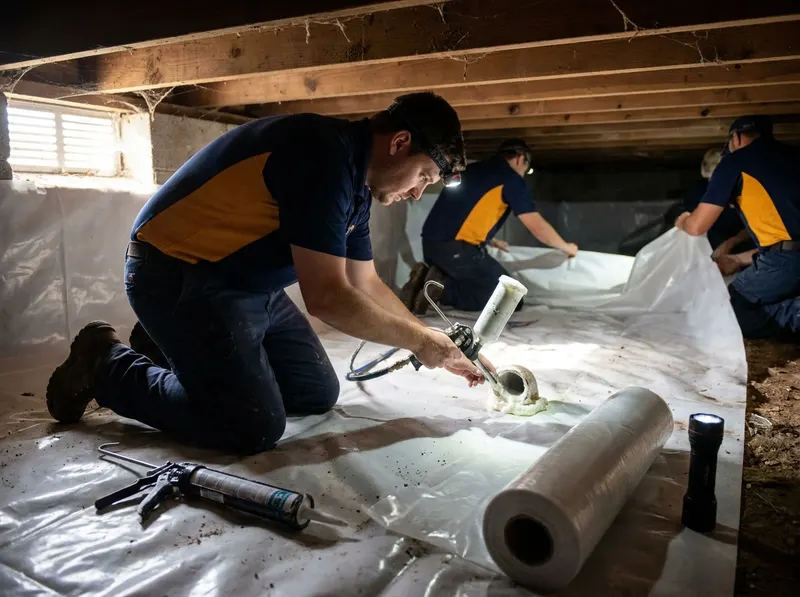
Subfloor zones across Middle Tennessee endure prolonged seasonal humidity and saturated clay subgrades, transforming exposed crawl spaces into entry conduits for wood-destroying organisms. In older housing stock within Belmont-Hillsboro, 12 South, and East Nashville, historic stone and vented brick foundations draw high ground moisture that fosters subterranean termite activity and dry-rot fungi. Standard exterior broadcast applications fail when structural framing sits over open, damp dirt. Installing an engineered vapor barrier establishes an impenetrable perimeter, isolating structural joists from soil dampness and stopping native subterranean insect colonies before they breach sill plates.
Selecting crawl space encapsulation pest defense depends on current moisture levels, structural framing integrity, and existing insect pressure. Homes with standing water or chronic wood moisture content above 18% require a closed envelope complete with a dedicated condensate management system, rather than simple vent screening. While localized insecticide applications manage active surface infestations, unsealed soil preserves the humid habitat required for continuous re-infestation by brown recluse spiders and camel crickets. Encapsulation trades passive vent airflow for a controlled subfloor microclimate, requiring mechanical dehumidification that draws continuous power to maintain subfloor relative humidity below 50%.
Installations follow a structured technical sequence: 1. Clearing debris, old fiberglass batts, and biological waste across the subfloor grade. 2. Grading low spots and laying antimicrobial drainage matting where necessary. 3. Fastening a high-puncture-resistance 12 to 20-mil vapor barrier to the soil, wrapping foundation piers, and sealing all seams with structural acrylic tape. 4. Leaving an explicit 3-inch visual inspection gap beneath the sill plate to satisfy local termite barrier regulations. 5. Sealing exterior foundation vents and deploying an automated low-temperature dehumidifier to stabilize wood moisture levels.
Every job gets a firm, written price after a free on-site visit.
For standards, safe disposal, and service guidance on pest control services in Nashville, TN, useful references include U.S. EPA, ENERGY STAR, U.S. Dept. of Energy, Consumer.gov, U.S. Census Bureau, and Google Maps. General consumer and small-business resources are available from USA.gov, Better Business Bureau, FTC Consumer Advice, U.S. Small Business Administration, and Ready.gov.
Tell us about your crawl space encapsulation pest defense job in Nashville and we'll send a clear, written quote, usually the same day.
 HarborFlare Insect Defense