Rodent exclusion and abatement in Nashville operates on an architectural defense standard rather than open-ended toxic bait rotations. Urban structures in Germantown and East Nashville often present brick-to-sill plate…
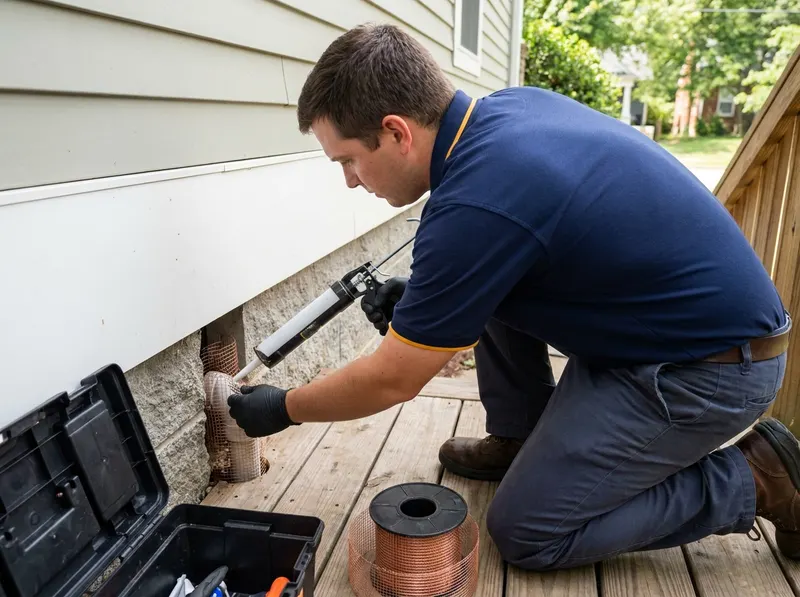
Rodent exclusion and abatement in Nashville operates on an architectural defense standard rather than open-ended toxic bait rotations. Urban structures in Germantown and East Nashville often present brick-to-sill plate transitions where mortar weathering allows house mice access through openings as small as 6 millimeters. In wooded parcels near Radnor Lake State Natural Area or Cheekwood Estate & Gardens, roof rats utilize overhanging white oak branches to bypass foundation barriers and enter attic louvers. HarborFlare Insect Defense implements complete mechanical barriers using 19-gauge building envelope standards, 0.25-inch galvanized steel wire cloth, and elastomeric sealants. Mechanical exclusion establishes a barrier that prevents secondary intrusions, contrasting with rodenticides that risk indoor carcass decay and non-target poisoning of neighborhood pets, following ecological management principles outlined by the National Wildlife Research Center.
Decision-fit requirements separate isolated trap placements from comprehensive exclusion projects. Historic limestone foundations in Sylvan Park, 12 South, and Belmont-Hillsboro require labor-intensive mortar repointing and crawl space vent screens, whereas modern slab constructions in The Nations or Donelson primarily demand garage threshold gaskets and weep-hole vent covers. The operational trade-off centers on upfront capital allocation: retail snap traps cost under $30 but leave building breaches open, inviting continuous migration from the Cumberland River corridor and adjacent properties along Shelby Bottoms Greenway. Exclusion work requires physical crawling of subfloors and elevated roofline ridge inspections, establishing a permanent structural repair under guidance from the EPA Rodenticide Risk Mitigation standards and structural pest containment benchmarks from the National Pesticide Information Center.
Abatement protocols operate in three consecutive steps: First, field technicians map structural transit paths, rub marks, and droppings across crawl spaces, soffits, and basements. Second, technicians execute exterior mechanical exclusion, securing exterior pipe penetrations, crawl space access hatches, and HVAC chases using copper mesh and metal flashing compliant with ASTM International building standards. Third, internal extraction traps run for 7 to 14 days to capture trapped individuals without scattering rodenticides into HVAC ducts, aligning with the occupational guidelines of OSHA pest management guidelines and structural integrity mandates from the International Code Council. Post-extraction sanitization applies bio-enzymatic sprays to denature pheromone trails, preventing new rodents from tracking past scents back to the foundation, consistent with CDC rodent cleanup protocols and disease prevention advisories published by the Tennessee Department of Health.
Every job gets a firm, written price after a free on-site visit.
For standards, safe disposal, and service guidance on pest control services in Nashville, TN, useful references include U.S. EPA, ENERGY STAR, U.S. Dept. of Energy, Consumer.gov, U.S. Census Bureau, and Google Maps. General consumer and small-business resources are available from USA.gov, Better Business Bureau, FTC Consumer Advice, U.S. Small Business Administration, and Ready.gov.
Tell us about your rodent exclusion and abatement job in Nashville and we'll send a clear, written quote, usually the same day.
 HarborFlare Insect Defense